Short answer: you need something to practice on at home, but it does not have to be a grand piano, or even an acoustic one. For most beginners, a good digital piano with weighted keys is exactly what a teacher would recommend. This guide covers what to look for, what to avoid, and when it makes sense to consider an acoustic piano.
Do I really need a piano at home to take piano lessons?
You need access to a keyboard between lessons. A weekly lesson of 30 to 60 minutes is where your teacher shows you what to do and corrects what is not working. The real progress happens in short, regular practice sessions at home.
The good news is that you do not need to own anything to get started. Our lesson rooms have quality pianos, and your first trial lesson is free.
What should a beginner look for in a digital piano?
Not all keyboards are equal. A handful of features matter far more than the brand name or the number of built-in sounds:
- 88 keys. A full-size keyboard has the same range as an acoustic piano, so you will not outgrow it in a few months.
- Weighted keys. Weighted keys (sometimes called "graded hammer action") feel like a real piano and build the finger strength and control that piano playing needs.
- Touch sensitivity. The harder you press, the louder the note. Without it, you cannot learn to play softly or with expression.
- A proper sustain pedal. Look for a real pedal you can press and release with your foot, not a tiny button or switch.
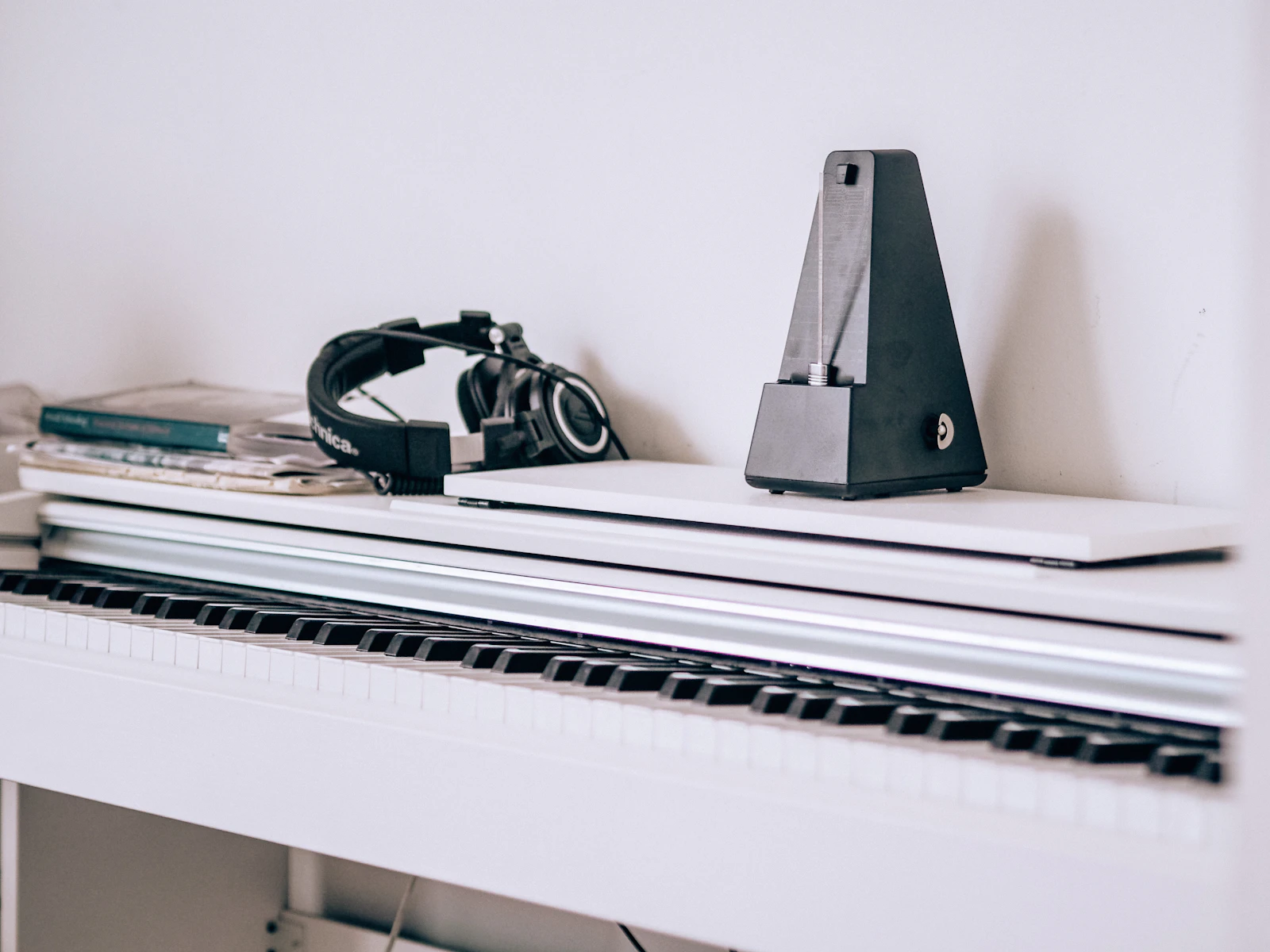
- A headphone jack. Perfect for quiet practice early in the morning, late at night, or in a condo or apartment.
- A sturdy stand and an adjustable bench. Sitting at the right height with relaxed wrists matters for technique and comfort, especially for kids.
Digital piano or acoustic piano: which is better for a beginner?
For most beginners, a digital piano is the smarter first purchase. Here is how the two compare:
- Digital pianos cost less, never need tuning, take up less room, can be played with headphones and are easy to move. At the entry level, the touch and sound are a simpler version of a well-maintained acoustic piano.
- Acoustic pianos offer a more nuanced touch and a richer tone, but they cost more, need regular tuning (usually at least once a year), are heavy to move and cannot be turned down.
If your goal is Royal Conservatory exams at the higher grades, ask your teacher about moving to an acoustic piano or a high-end digital piano as you progress. Our family guide to RCM exams in Toronto explains what to expect.
Is a 61-key keyboard enough for a beginner?
It will get you through the first few weeks, but most beginner pieces soon need more keys, and unweighted keys do not build the finger strength and control that piano lessons rely on. If budget is tight, a used 88-key weighted digital piano is usually a better choice than a new, smaller, unweighted keyboard.
How much should I spend on a first piano?
Less than you might think, but more than the cheapest option. Avoid toy keyboards that lack weighted keys and touch sensitivity, and avoid paying for features a beginner will never use. A solid entry-level digital piano from a well-known brand will serve a new student well for years.
If you are buying used, check that every key works, that the pedal is included, and that the instrument sounds and feels even across the whole keyboard. Models and prices change often, so tell us what you are considering and we will happily advise.
Can I start piano lessons before I buy a piano?
Yes. Many families book the free trial lesson first, meet the teacher, and buy once they know the student is keen. Your teacher can recommend what to look for, and you will want an instrument at home within the first couple of weeks so the lessons stick. For more on this decision, see our post on renting versus buying a child's first instrument.
Where should I put the piano at home?
Choose a quiet spot with good light where practice is easy to start and nobody is competing with the television. Leave room for the bench, and for a parent to sit nearby if the student is young. If you share your space with neighbours or sleeping family members, headphones make practice possible at any hour.
Piano lessons in Leaside and East York
Our studio is at 214 Laird Drive, 2nd Floor, a few minutes' walk from Bayview and Eglinton. Our piano faculty includes classical and RCM specialist Lili Khachatryan, Polina Melamed, Martin Aucoin and Melissa Paju, with backgrounds that range from classical and exam preparation to jazz and contemporary playing. If you are choosing a teacher, our guide to what to look for in private piano lessons in Leaside can help.
Piano lessons are $40 for 30 minutes, $55 for 45 minutes and $70 for 60 minutes, billed in four-lesson cycles, with no registration or administration fees. The first lesson is a free trial. See our piano lessons page and current prices, or call 416 483 9117 to book. If you are also wondering about timing, read is it too late to start music lessons in October?